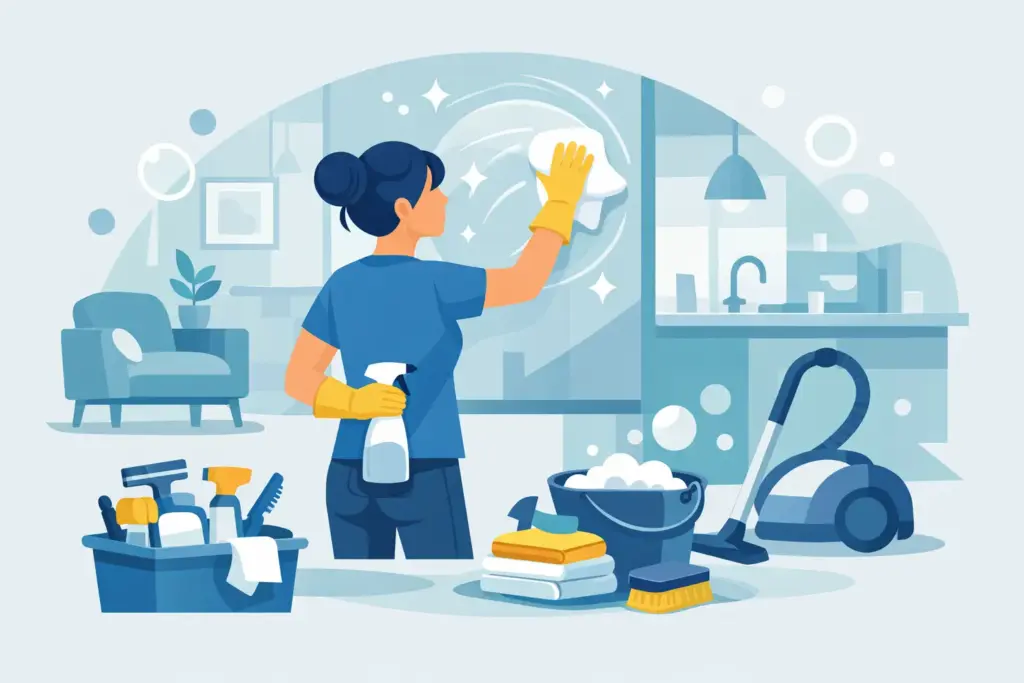
The kitchen floor is sticky, the bathroom looks like it needs its own weekend, and the laundry keeps multiplying. If that sounds familiar, this deep cleaning guide for busy homeowners is for you. A deep clean does not have to mean losing an entire Saturday to scrubbing. The goal is to handle the buildup that regular tidying misses, without turning cleaning into another full-time job.
For most busy households, the smartest approach is not to clean every room from top to bottom in one exhausting push. Start where the mess affects your daily life, work in short focused blocks, and save the jobs that need extra muscle for the right day or the right help.
What Deep Cleaning Really Means
Regular cleaning keeps a home presentable. You wipe counters, run the vacuum, take out trash, and clean the bathroom enough to get through the week. Deep cleaning goes after the places that quietly collect grease, dust, soap scum, crumbs, pet hair, and clutter over time.
That can mean cleaning inside the microwave, wiping cabinet fronts, washing baseboards, vacuuming under furniture, scrubbing shower corners, or clearing out the refrigerator. It is not about making your house look like nobody lives there. It is about resetting the areas that make a home feel dirty even after you have picked up.
The exact scope depends on your home. A family with kids and pets may need more attention on floors, sofas, and bathrooms. A couple working long hours may care most about the kitchen, entryway, and laundry. If you are preparing for guests, a move, or a fresh start after a hectic season, you may want a more complete room-by-room clean.
Deep Cleaning Guide for Busy Homeowners: Start With Impact
When time is limited, do not begin with a hidden shelf or a perfect pantry. Start with the spaces that give you the biggest visible and practical difference. For most homes, that means the kitchen, bathrooms, floors, and the main living area.
Pick three priorities before you pull out supplies. Maybe the kitchen needs degreasing, the hall bathroom needs a serious scrub, and the living room needs dusting and vacuuming under the couch. Once those are done, your home will feel better even if the linen closet waits another week.
A helpful rule is to focus on one task that improves hygiene, one that improves appearance, and one that removes stress. Scrubbing the toilet improves hygiene. Clearing the kitchen table improves appearance. Doing a load of towels and putting them away removes a small but constant source of stress.
Use a 30-Minute Reset Block
A deep clean can happen in pieces. Set a timer for 30 minutes and choose one clearly defined job, such as cleaning the refrigerator shelves or washing the bathroom walls and baseboards. Stop when the timer ends unless you genuinely have the energy to continue.
This works better than telling yourself you will “clean the bathroom.” That phrase is too broad, which makes it easy to put off. A specific job has a clear finish line. Over a few evenings, several small jobs turn into a real reset.
If you have a free morning, use two 45-minute blocks with a break in between. The break matters. Cleaning while tired often leads to rushing, missed spots, and a home that feels only half done.
Work From High to Low and Dry to Wet
A simple order prevents you from creating more work. Begin with dry jobs like decluttering, dusting ceiling fans, wiping vents, and vacuuming crumbs from drawers. Then move to wet jobs like wiping surfaces, mopping floors, and scrubbing the shower.
Within each room, work from high to low. Dust upper shelves before lower surfaces. Wipe counters before cleaning the floor. Otherwise, the dirt you knock down lands on something you already cleaned.
Keep your supplies close instead of walking back and forth for every bottle. A small caddy with microfiber cloths, an all-purpose cleaner, glass cleaner, bathroom cleaner, a scrub brush, gloves, and trash bags will cover most jobs. Check product labels, especially when cleaning stone counters, wood surfaces, or appliances. Mixing cleaning chemicals is never worth the risk.
Give the Kitchen a Real Reset
The kitchen works hard, which is why it can look messy again almost immediately. The key is to clean the grease and crumbs that live beyond the obvious counter space.
Start by clearing the counters and putting away what belongs elsewhere. Wipe cabinet doors, handles, backsplash, and the outside of major appliances. Pay special attention to the stove knobs, microwave handle, refrigerator doors, and the area around the trash can. These spots collect fingerprints and splatter fast.
Next, deal with one inside job. Clean the microwave, toss old leftovers from the refrigerator, or wipe one cabinet shelf. You do not need to empty every cabinet unless you are doing a full seasonal clean. For a busy homeowner, one interior task per kitchen reset is usually enough.
Finish by cleaning the sink and floor. A shiny sink makes the entire kitchen look better, and a careful sweep or vacuum before mopping keeps dirt from turning into streaks.
Make Bathrooms Feel Clean, Not Just Picked Up
Bathrooms are small, but they can take longer than expected because soap scum and mineral buildup need time to loosen. Spray the shower, tub, toilet, and sink first. Let the cleaner sit while you remove empty bottles, wipe mirrors, and clear the vanity.
Then return to scrub. Focus on the shower floor, faucet handles, toilet base, and the corners where grime collects. Replace hand towels, empty the trash, and wipe the light switch and door handle. Those final details make a bathroom feel fresh without adding much time.
If hard-water stains keep returning, a quick wipe after showers can reduce the work later. But be realistic. If your schedule is packed, a regular maintenance clean is often more useful than waiting until the buildup becomes a major job.
Do Not Forget the Things You Touch Every Day
The most overlooked areas are often not hidden at all. They are simply easy to ignore because you use them constantly. Door handles, light switches, remote controls, stair rails, cabinet pulls, and refrigerator handles deserve a quick wipe during a deep-cleaning session.
Also look at soft surfaces. Vacuum upholstered furniture, especially under cushions. Wash throw blankets and pet bedding. If you have children, check around the dining chairs and under the couch. Those areas can hold enough crumbs to explain a lot of mystery messes.
Baseboards, window tracks, and blinds are worth doing when you have more time, but they do not need weekly attention. Put them on a rotating list. One or two detail tasks per month is more manageable than trying to do everything at once.
Know When to Call for Help
There is no prize for handling every cleaning job alone. If you are working long hours, caring for family, recovering from an illness, preparing for a move, or dealing with heavy clutter, bringing in help can be the practical choice.
A professional deep clean is especially useful when you need kitchens, appliances, cabinets, drawers, bathrooms, floors, and overlooked areas handled in one visit. It can also give you a clean baseline that is much easier to maintain afterward. For Woodbridge households that need flexible scheduling and a judgment-free reset, Mrs Clean Woodbridge can handle anything from regular upkeep to more demanding deep-cleaning projects.
Before a cleaning visit, do a quick pickup of paperwork, valuables, and items you do not want moved. You do not need to pre-clean the house. In fact, that defeats the purpose. Just make the areas accessible and be clear about your top priorities.
Keep the Reset From Disappearing
After deep cleaning, protect your time with a short weekly routine. Wipe kitchen counters and the bathroom sink, vacuum or sweep high-traffic floors, take out trash, and do one small detail task. That is enough to slow down buildup without making cleaning the center of your week.
A home does not need to be spotless to be healthy, welcoming, and comfortable. Choose the jobs that make life easier, give yourself permission to spread the work out, and ask for help before the mess becomes overwhelming. A cleaner home should give you more breathing room, not take it away.