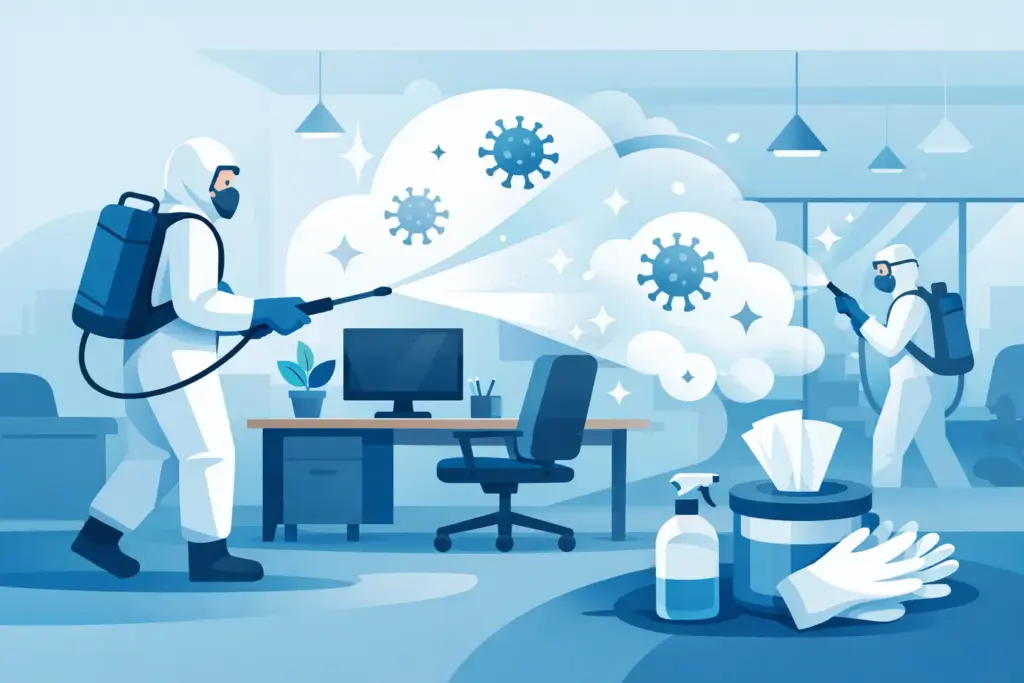
A shared keyboard can pass through three sets of hands before lunch. The break-room fridge handle gets touched all day. Then there are door handles, elevator buttons, copier panels, faucets, chair arms, and conference tables. Office disinfection for workspaces is about paying attention to the places people actually touch, not spraying a little cleaner in the air and calling the job done.
For a small office, a clean workplace helps employees feel cared for and gives visitors a better first impression. It can also reduce the everyday buildup of germs that moves quickly through a shared space. The goal is practical: keep the office healthier, cleaner, and ready for the work happening there.
Cleaning and disinfecting are not the same job
Cleaning removes visible dirt, dust, crumbs, spills, and grime. Disinfecting uses an appropriate product to kill or reduce germs on a surface after it has been cleaned. One does not replace the other.
If a break-room counter is sticky, for example, disinfectant cannot do its best work through grease and food residue. The surface needs to be cleaned first, then treated according to the product directions. That includes the contact time, which is the amount of time the surface must remain visibly wet before it is wiped or allowed to air-dry.
This is where rushed cleaning falls short. A quick wipe may make a desk look better, but appearance alone does not mean high-touch areas were properly disinfected. At the same time, disinfecting every single item in an office every hour is not always realistic or necessary. A sensible plan focuses on traffic, shared use, and the type of work your team does.
Where office disinfection for workspaces matters most
Start with the surfaces that many people use without thinking. In most offices, those are entry door handles, interior door knobs, light switches, restroom fixtures, sink faucets, shared phones, copier buttons, refrigerator handles, microwave handles, coffee makers, conference-room tables, and shared keyboards or mice.
Personal desks are a little different. Employees may prefer to handle their own desk equipment, especially if paperwork, personal items, or sensitive materials are present. A cleaning team can disinfect the desk surface and nearby touchpoints while working around items left in place. Clear communication avoids confusion and protects privacy.
Restrooms and break rooms usually need the closest attention because they combine high traffic with moisture, food, and shared fixtures. These areas should be cleaned thoroughly, not just checked for trash. A clean restroom says a lot about how an office is maintained, and a neglected break room can become an easy place for messes and odors to build up.
Do not forget the overlooked spots
The most obvious surfaces are not the only ones that matter. Cabinet pulls, water cooler taps, vending-machine buttons, chair arms, handrails, supply closet handles, and the buttons on a shared office phone can get missed during a basic wipe-down.
There is no need to turn the office into a laboratory. The simple habit is to look at how people move through the space. Wherever hands naturally land, that surface belongs on the cleaning checklist.
How often should an office be disinfected?
The right frequency depends on the office, not just the square footage. A five-person office with mostly private rooms has different needs than a busy real estate office, daycare administration area, medical waiting room, or customer-facing storefront.
For many small offices, regular weekly cleaning with focused disinfection of shared touchpoints is a strong starting point. Offices with frequent visitors, shared workstations, high employee traffic, or seasonal illness concerns may need service two or more times each week. Daily attention can make sense for restrooms, break rooms, reception areas, and other spaces used constantly.
It also helps to adjust when circumstances change. If several people are sick, a deeper service focused on high-touch surfaces can be a smart response. After a staff meeting, event, renovation, or especially busy week, the office may need more than the usual maintenance clean.
Consistency matters more than a one-time intense job followed by weeks of neglect. A realistic schedule that gets completed is better than an ambitious plan nobody can keep up with.
A practical disinfection routine for your team
Professional cleaning makes the biggest difference when the office has simple habits in place between visits. Employees do not need to become cleaners. They just need a clear, easy routine for spills and shared spaces.
Keep soap, paper towels, and hand sanitizer stocked where people need them. Ask employees to clear food from desks and wipe up spills when they happen. Encourage anyone using a shared desk, headset, or keyboard to wipe it down before handing it off. If your office has a cleaner or office manager, give that person a short list of priority areas rather than a vague request to “clean everything.”
A few small policies can prevent a bigger mess:
- Keep disinfecting products in their original labeled containers.
- Never mix cleaning chemicals, even if both products seem safe on their own.
- Follow product directions for the correct surface and contact time.
- Store products away from food, children, and unauthorized use.
- Make sure rooms have reasonable ventilation during cleaning.
Fragrance is not proof of cleanliness. In fact, a heavily scented product can be uncomfortable for employees with allergies, asthma, or scent sensitivities. Product choice should fit the surface, the workspace, and the people who use it.
What a professional office cleaning visit should cover
A dependable office cleaning service should do more than empty bins and vacuum the center of the floor. The team should work through the rooms in a logical order, remove dust and debris, clean the surfaces that need it, and disinfect the shared touchpoints that carry the most traffic.
Depending on your service level, that can include restrooms, kitchens and break rooms, desks and reception counters, glass doors, floors, trash removal, and detailed attention to handles, switches, and appliance controls. Deep cleaning can also address areas that do not need daily service but should not be ignored, such as cabinet fronts, baseboards, interior appliances, corners, and buildup around restroom fixtures.
The best approach is customized. An accounting office may need careful service around files and computer equipment. A salon suite may have different sanitation needs than a traditional office. A small warehouse office may need its entry, restroom, and lunch area handled more often than the back office. A good cleaner asks what matters in your space instead of giving every business the exact same checklist.
At Mrs Clean Woodbridge, we understand that business owners need practical help, fair pricing, and a cleaning schedule that does not interrupt the workday. Many offices prefer after-hours service or cleaning while staff are away. The important part is having a trusted team, clear access instructions, and a plan that fits your operation.
Signs your current plan needs an upgrade
If employees are regularly cleaning bathrooms themselves, if the break room has lingering odors, or if your front desk looks dusty by midweek, your current schedule may be too light. The same is true when trash is overflowing, floors look dull, or high-touch areas are only addressed when someone complains.
Another warning sign is uncertainty. If nobody knows who is responsible for cleaning the copier buttons, restocking restroom supplies, or handling a spill in the kitchen, those tasks often get skipped. A written routine gives everyone a better understanding of what is covered daily, weekly, and during a deeper clean.
Price matters, especially for a small business, but the cheapest service is not always the most affordable if it leaves work for employees or requires repeated fixes. Ask what is included, which supplies are provided, how high-touch surfaces are handled, and whether the schedule can change as your office needs change.
A workplace does not need to look perfect to be well cared for. It needs a cleaning plan that matches real traffic, respects the people using the space, and gets followed week after week. When the details are handled, your team can walk in, get to work, and spend less time worrying about the next mess.