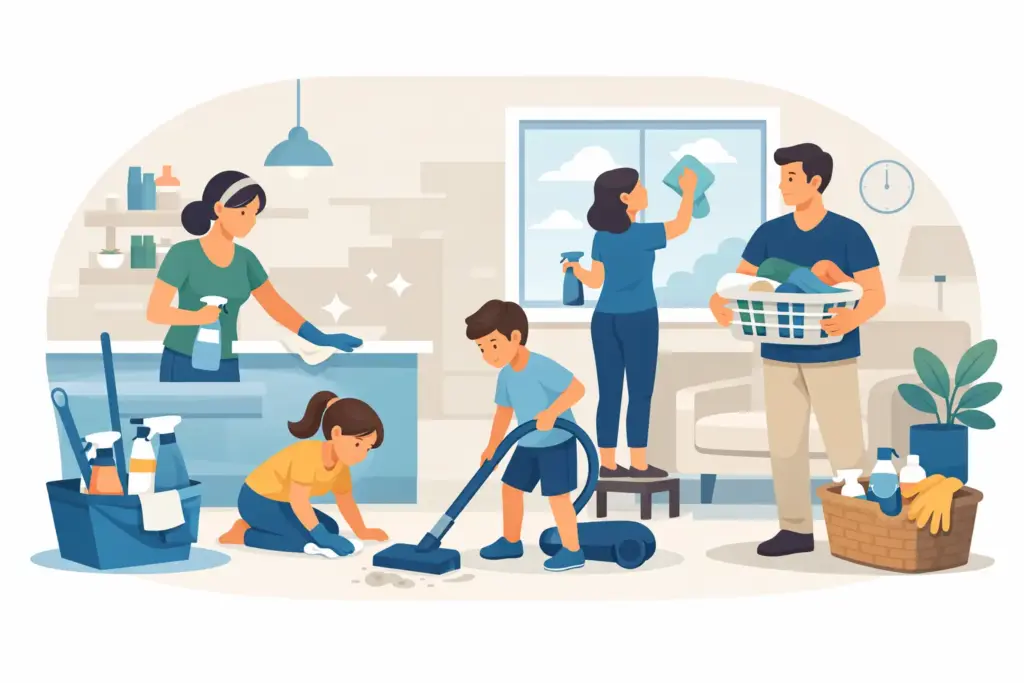
A family kitchen can look perfectly fine at 7:30 a.m. and feel completely out of control by dinner. Breakfast dishes pile up, shoes land in the hallway, homework covers the table, and the bathroom somehow needs attention again. The best cleaning plan for families is not a strict schedule that falls apart after one busy week. It is a realistic system that keeps your home comfortable without asking one person to spend every free hour cleaning.
For most households, the answer is a mix of small daily resets, a few assigned weekly jobs, and occasional deeper cleaning. The right balance depends on your children’s ages, pets, work schedules, and how much time you actually have. A plan should make life easier, not become another thing to feel guilty about.
Start With a Family Cleaning Plan You Can Keep
The biggest mistake families make is creating a plan for their ideal week instead of their real one. If you are driving kids to practice, working late, managing school forms, cooking, and trying to get a little rest, a two-hour cleaning block every Saturday may not happen. Build around short, repeatable tasks instead.
Think of cleaning in three levels. Daily work keeps messes from spreading. Weekly work handles the rooms and surfaces everyone uses. Monthly or seasonal work takes care of the areas that are easy to ignore until they become a bigger job.
Your plan also needs a clear standard. A lived-in home with kids does not need to look like no one lives there. Aim for sanitary bathrooms, a usable kitchen, clear walkways, manageable laundry, and floors that are safe to walk on. Toys in a basket and a few backpacks by the door are normal. Sticky counters and overflowing trash are the things worth addressing quickly.
The Daily Reset: 15 Minutes Makes a Difference
A daily reset is the foundation of the best cleaning plan for families because it prevents small messes from turning into a stressful weekend project. Choose one time that fits your household, usually after dinner or before bed, and set a timer for 10 to 15 minutes.
During that reset, everyone does something. Younger children can put toys in bins, match shoes, wipe the table with help, or bring dirty clothes to the hamper. Older kids can load the dishwasher, take out trash, clear backpacks, or sweep the kitchen. Adults can handle the tasks that need more care, such as wiping counters, dealing with mail, and checking the next day’s schedule.
Keep the reset focused on the high-traffic areas. The kitchen, living room, entryway, and main bathroom generally matter more than perfectly organizing a bedroom closet on a Wednesday night. If the family can wake up to a clear table, clean sink, and open pathway, the house will feel calmer right away.
A simple rule helps here: nobody leaves a room empty-handed. If you are walking upstairs, bring the water bottle, toy, jacket, or laundry that belongs there. It sounds small, but it cuts down on the wandering clutter that makes a home feel messy.
Give Weekly Jobs a Home on the Calendar
Weekly cleaning works best when you spread it across the week instead of saving everything for one exhausting day. You do not have to clean every room from top to bottom each time. Assign a few priority jobs to specific days so everyone knows what comes next.
For example, you might vacuum common areas on Monday, clean bathrooms on Wednesday, change bedding on Friday, and mop kitchen floors on Sunday. The exact days are not important. Consistency is. If Wednesday is packed with activities, switch the bathroom clean to Thursday. A cleaning plan should bend when family life gets busy.
There are four areas most homes should cover each week:
- Kitchen: Wipe appliance fronts, clean the microwave, sanitize counters and sink, and check the refrigerator for leftovers.
- Bathrooms: Clean toilets, sinks, mirrors, tubs or showers, and replace used towels as needed.
- Floors: Vacuum rugs and main walkways, then mop hard floors where food, pet hair, and daily traffic build up.
- Bedrooms: Change sheets regularly, empty trash, gather laundry, and clear surfaces that collect cups, papers, and clothes.
If your home has pets, add a quick pet-hair check to the main rooms. If you have a crawling baby or toddler, floors deserve more frequent attention. If teenagers spend most of their time in their bedrooms, it may make sense to set a minimum standard for those spaces instead of cleaning them for them. Every family has different pressure points.
Divide Jobs by Ability, Not Just Age
Kids can be part of the cleaning plan without turning every chore into an argument. The goal is not perfection. It is teaching them that everyone contributes to the home they share.
A preschooler may be able to sort socks or put books back on a shelf. An elementary-age child can make a bed, feed a pet, wipe down a bathroom counter, and help unload dishes. Teens can handle laundry from start to finish, vacuum, clean a bathroom, or take responsibility for the trash and recycling.
Avoid vague requests like “clean your room.” Be specific: “Put laundry in the hamper, place toys in the bin, clear the floor, and bring dishes to the kitchen.” Clear directions work better for children and adults alike.
It is also fair to recognize that some jobs are unpleasant or time-consuming. Rotate those tasks when possible. If one person always cleans the toilets while another only straightens pillows, resentment will build. A good system shares the work in a way that feels reasonable, even if it is not perfectly equal every week.
Keep Supplies Where the Work Happens
A cleaning plan fails quickly when basic supplies are hard to find. Keep a small set of family-safe products where you use them. A bathroom caddy can hold toilet cleaner, disinfecting spray, microfiber cloths, and a scrub brush. A kitchen bin can hold surface cleaner, sponges, gloves, and trash bags.
For homes with small children or pets, store products securely and follow label directions. You do not need a cabinet full of specialty bottles to keep a house clean. Reliable basics and a few good cloths can handle most regular maintenance.
The same idea applies to organization. Put a basket near the stairs for items that belong upstairs, keep a hamper where clothes actually come off, and place a small trash can in the rooms where wrappers and tissues tend to gather. Make the easy choice the obvious choice.
Plan for Deep Cleaning Before It Becomes Urgent
Regular cleaning keeps a home running, but it does not reach everything. Cabinet interiors, baseboards, refrigerator shelves, oven buildup, blinds, drawers, laundry rooms, and behind appliances need occasional attention. Trying to do all of that in one weekend can leave a family burned out.
Choose one deep-cleaning focus each month. In January, clean the refrigerator and pantry. In February, tackle bathrooms more thoroughly. Another month, work on cabinets, closets, or windows. This approach keeps the job manageable and lets you see progress without putting your whole life on hold.
Sometimes a home needs more than a routine can handle. After an illness, a move, a new baby, a hectic work season, or a stretch of clutter that got away from everyone, bringing in help is practical. A recurring house cleaning service can handle the regular heavy lifting, while your family stays focused on the daily reset. A one-time deep clean can also give you a fresh starting point when the house feels overwhelming.
For busy Woodbridge families, Mrs Clean Woodbridge can work around real schedules, bring supplies, and customize the level of cleaning needed. There is no shame in getting support. Time and energy are limited, and a clean, comfortable home is often worth protecting.
Leave Room for Imperfect Weeks
There will be weeks when the plan does not happen. Someone gets sick, work runs late, school events take over, or you simply need a break. Do not respond by trying to clean the entire house at midnight.
Pick the two or three tasks that make the biggest difference: take out the trash, wash dishes, clean the main bathroom, or vacuum the busiest floor. Then restart the normal routine when you can. A workable home is built through steady resets, not one perfect cleaning day.
The best plan is the one your family can return to without stress. Keep it simple, share the load, and let outside help fill the gap when life gets full. That gives your family more time to enjoy the home you are working hard to care for.