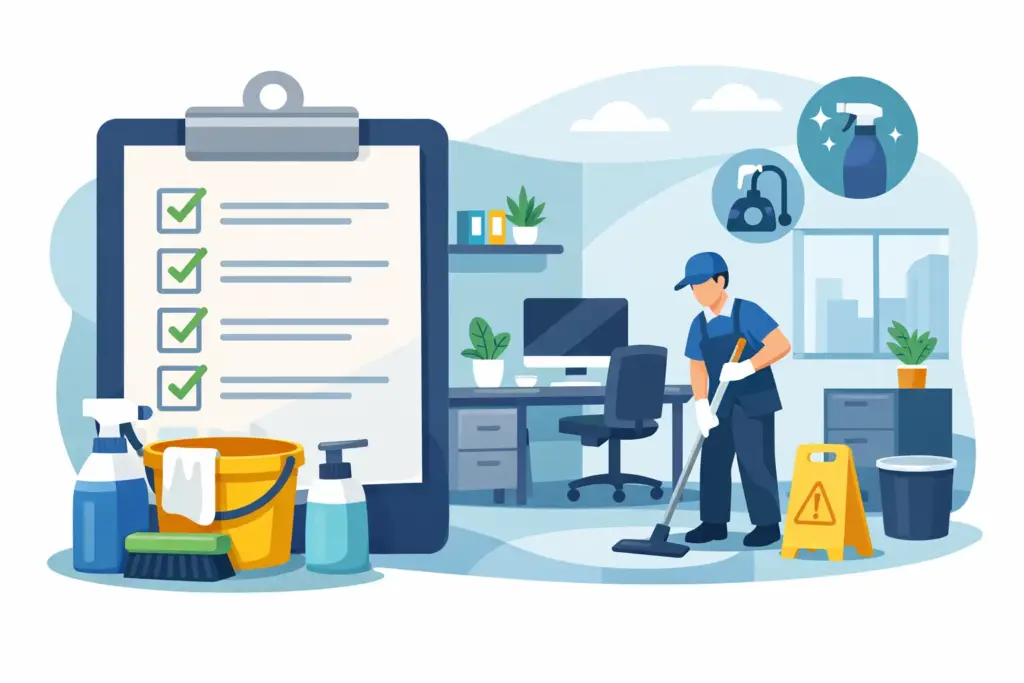
A small office can look messy fast. One overflowing trash can, fingerprints on the front door, coffee rings in the break room, and a restroom that missed its last wipe-down can change how employees and visitors feel about the whole business. This small office cleaning checklist helps you stay ahead of the everyday buildup without making cleaning another full-time job.
The best schedule depends on your team size, customer traffic, and how often people eat at their desks. A quiet office with four people may need a detailed clean once a week. A busy office with walk-in clients, shared restrooms, or a break room may need attention every day. The goal is not perfection. It is to keep the space clean, comfortable, and ready for work.
Start With the Areas People Notice First
Your entryway, reception area, and conference room do a lot of talking before anyone says hello. These spaces should be checked daily, especially when customers come through the door. Straighten chairs, remove obvious clutter, empty trash, and wipe down tables, counters, and door handles.
Floors matter here, too. A quick vacuum or sweep removes dirt that gets tracked in from the parking lot or sidewalk. In wet weather, check more often. Water, salt, and mud can make a small entrance look neglected quickly and can create a slipping hazard.
Keep the front desk free of old mail, food containers, and loose paperwork. If supplies, packages, or employee belongings need a home, give them one. Cleaning works better when basic organization is part of the routine.
Daily Small Office Cleaning Checklist
Daily tasks are the quick resets that stop odors, crumbs, and germs from piling up. They do not have to take all day, but they need to happen consistently. Before closing or at the end of a shift, handle these basics:
- Empty trash and replace liners when needed, especially in the kitchen and restroom.
- Wipe down high-touch surfaces, including door handles, light switches, shared phones, copier buttons, and reception counters.
- Clean break room counters, tables, sinks, microwave handles, and any visible spills.
- Check the restroom, empty the wastebasket, wipe the sink and toilet surfaces, and restock soap, paper towels, and toilet paper.
- Sweep or spot-vacuum entry areas, break rooms, and places where crumbs or dirt collect.
- Put away dishes, food, and loose supplies so they do not sit out overnight.
High-touch cleaning is especially helpful during cold and flu season. You do not need to spray every inch of the office throughout the day, but shared surfaces deserve regular attention. Use products that are appropriate for the surface and follow the label directions. Spraying and immediately wiping may not give disinfectant enough time to work.
Give Employees a Simple Part to Play
A professional cleaning service can take care of the bigger work, but employees can help keep the office in good shape between visits. Set reasonable expectations: dishes should be rinsed and put away, food should not be left in desks, and spills should be reported or cleaned right away.
Avoid turning employees into janitors. A clear shared-space policy is different from asking someone to scrub the restroom after a full workday. The office runs better when everyone handles their own mess and a dependable cleaner handles the actual cleaning.
Weekly Cleaning That Keeps Dirt From Settling In
A weekly clean goes beyond what is visible at the end of the day. This is when dust, fingerprints, floor grime, and restroom buildup get handled before they become harder and more expensive to remove.
Dust desks, shelves, window ledges, baseboards, chair arms, and office equipment. Wipe down desk surfaces without disturbing personal papers. For keyboards and electronics, use the right dry or lightly damp method instead of soaking them with cleaner.
Vacuum all carpeted areas thoroughly, including under desks, around chairs, and along edges. Hard floors should be swept and mopped. A small office may only need one weekly floor service, but high-traffic entries and kitchens may need extra attention during the week.
The restroom needs a deeper weekly clean even if it receives a daily touch-up. Clean and disinfect the toilet, sink, faucet, mirror, and floor. Wipe wall splashes, clean the base of the toilet, and check corners where hair and dust gather. A restroom can smell clean at first glance but still need real detail work.
In the kitchen or break room, wipe appliance exteriors, clean the inside of the microwave, remove old food from the refrigerator, and wipe cabinet handles. If your team uses a coffee maker every day, clean the drip tray and surrounding counter. Old coffee residue has a way of making an otherwise clean office smell stale.
Monthly Tasks for a Truly Clean Office
Monthly cleaning is where small details stop getting ignored. It is also a good time to look for maintenance concerns, such as a stained carpet, a leaking sink, or a vent covered in dust.
Wipe interior glass, clean windows where reachable, and dust blinds. Clean behind small appliances and under movable furniture. Wipe chair legs, cabinet fronts, and the outside of trash cans. Pay attention to walls near light switches, door frames, and break room tables, where fingerprints can build up.
A monthly refrigerator cleanout is worth putting on the calendar. Toss expired food, wipe shelves and drawers, and clean spills before they turn into odors. If nobody is assigned to this task, it often does not happen.
For offices with carpets, spot-treat stains as soon as you see them. Waiting until the monthly clean can make coffee, ink, or food stains harder to remove. Professional carpet cleaning may be needed periodically, depending on traffic and the type of flooring.
Build a Schedule That Fits Your Office
Do not copy another business’s schedule without thinking about how your office is used. A law office with client appointments may prioritize the lobby, conference room, and restroom. A small warehouse office may need more floor care at the entrance. A team that eats lunch at their desks may need more frequent trash removal and desk-area vacuuming.
Choose a person to do a quick weekly walk-through. They can check supplies, flag problem areas, and make sure cleaning is not being pushed off until it becomes a bigger issue. Keep the checklist in a shared place so there is no confusion about what is expected and when.
If you hire cleaning help, be clear about your priorities. Tell the cleaner which rooms receive visitors, which desks should not be disturbed, where cleaning supplies are stored, and whether there are alarm or access instructions. Trust and clear communication matter just as much as the task list.
When It Makes Sense to Bring in Office Cleaning Help
There is a point where asking staff to keep up with office cleaning stops being practical. If trash is overflowing, restrooms are getting skipped, floors are visibly dirty, or employees are spending work time trying to catch up, outside help can save time and frustration.
A recurring cleaner can handle the routine work on a schedule that fits your business, whether that is weekly, several times a week, or after hours. It also helps when you need a deeper reset before visitors, after a busy season, or after a move. Mrs Clean Woodbridge provides practical office cleaning for local businesses that want a thorough clean without a complicated process.
Keep a few minutes open at the end of each day for a quick reset, and let the heavier cleaning happen on a dependable schedule. When the office feels cared for, people notice – and your team can focus on the work that keeps the business moving.